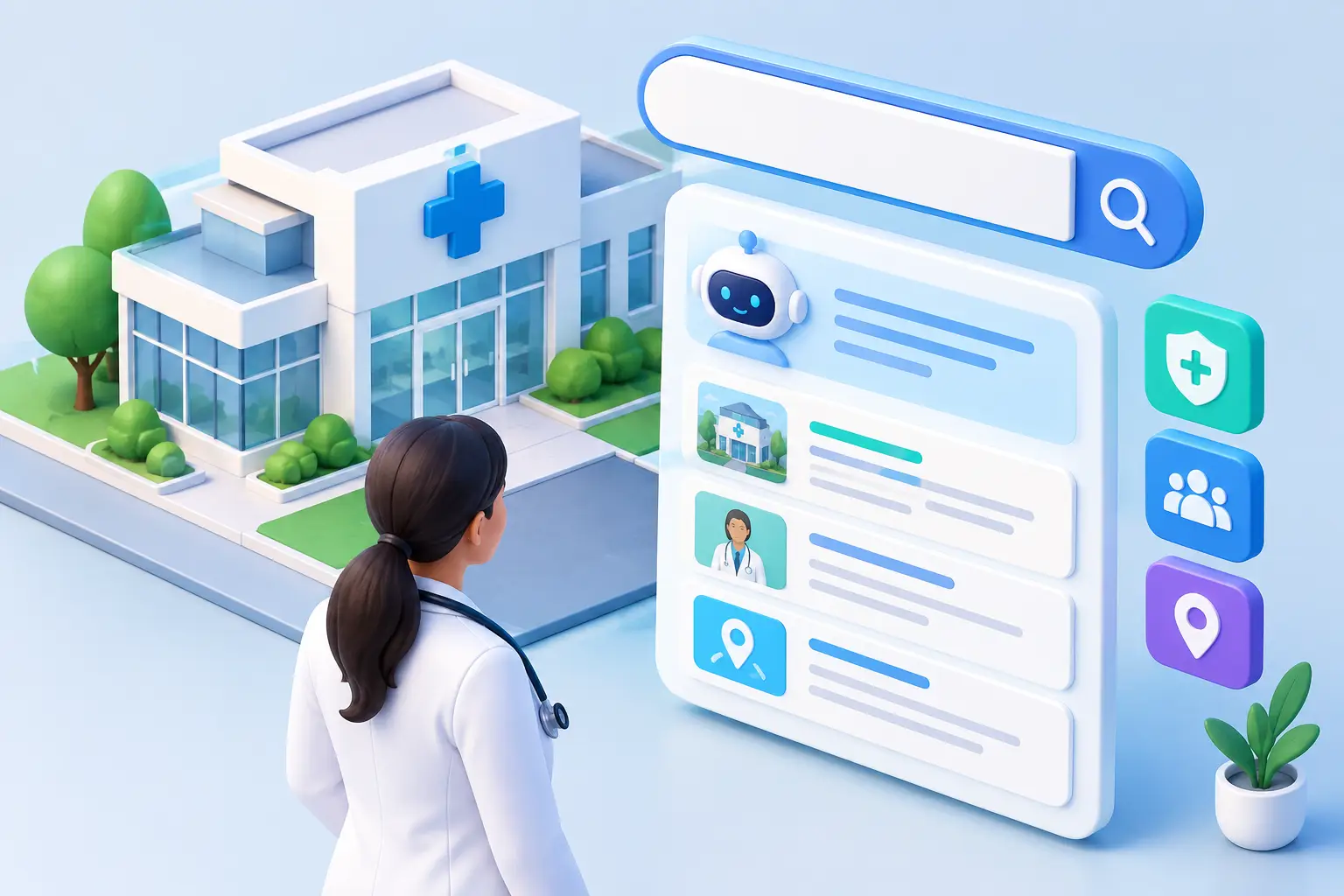
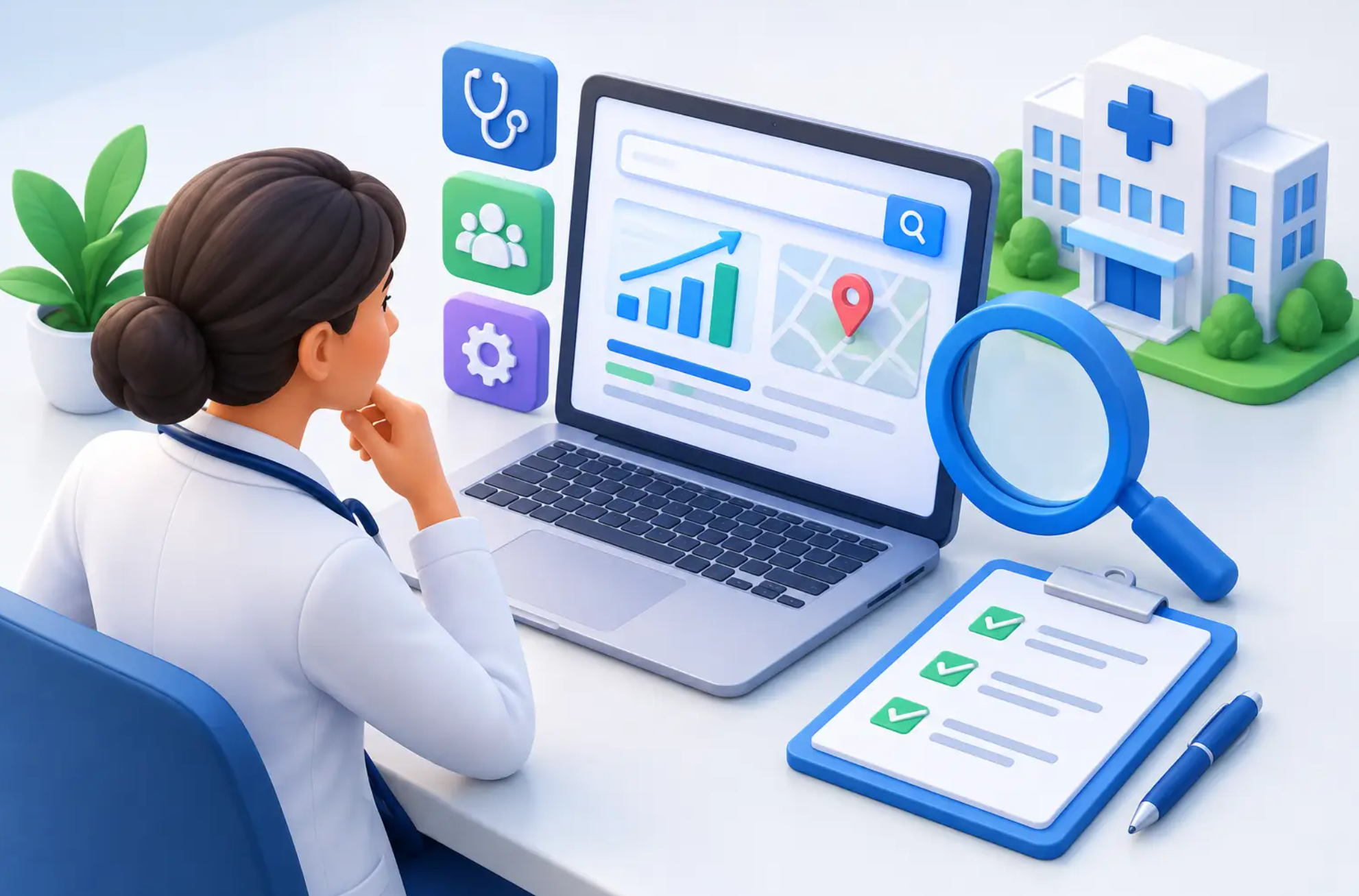
A prospective patient asks an AI tool whether they need an orthodontist or a cosmetic dentist, which consultant treats a particular condition, or where to find a reputable clinic near them. The answer may shape their shortlist before they ever search a clinic name. Generative engine optimisation for clinics is about making sure accurate, well-supported information from your business has a realistic chance of informing those answers.
This is not a replacement for organic SEO, local search or a well-built clinic website. It is an extension of them. AI-driven search rewards many of the same fundamentals that have always mattered in healthcare: clear clinical information, genuine expertise, technically accessible pages, credible third-party signals and a website that gives patients confidence to take the next step.
What generative engine optimisation means for clinics
Generative Engine Optimisation, often shortened to GEO, is the work of improving how a business and its content can be understood, selected and referenced by generative search tools. That includes Google AI Overviews, ChatGPT, Gemini, Microsoft Copilot and Perplexity, although each platform retrieves, weighs and presents information differently.
For a private clinic, this is less about trying to force a brand mention into every AI response and more about becoming an unambiguous, trustworthy source on the questions patients genuinely ask. A dental practice might need clear evidence of its services, locations, clinicians and suitability criteria. A cosmetic surgery provider may need carefully reviewed procedure information, transparent recovery guidance and demonstrable consultant credentials. A private consultant needs their areas of expertise, referral process and hospital affiliations to be consistently represented.
AI tools do not behave like a single search results page. They often combine information from several sources, summarise it and may change their answer depending on wording, location and context. Visibility is therefore less predictable than a traditional ranking position. The sensible aim is to improve eligibility and credibility across the information ecosystem, rather than chase a single metric.
Why healthcare needs a more careful approach
Healthcare sits within Google’s Your Money or Your Life category. Content that could influence someone’s health decisions is held to a higher standard, and rightly so. The same principle applies when AI systems assess and synthesise medical information.
Thin pages written around search phrases are unlikely to build lasting value. Nor should a clinic publish generic AI-generated medical copy without clinical review simply because competitors are producing more content. It can introduce factual errors, overstate suitability, create compliance concerns and weaken patient trust.
The stronger approach is to make each important page useful in its own right. Explain what the treatment involves, who may or may not be suitable, what a consultation is for, realistic risks or limitations, expected recovery where relevant, and when a patient should seek urgent medical advice elsewhere. Content should be written or properly reviewed by an appropriate clinician, with authorship and credentials visible where they add meaningful reassurance.
There is a commercial benefit as well. Patients who arrive with clearer expectations tend to make better enquiries. A page that answers the difficult questions honestly may generate fewer low-intent leads, but more suitable consultations. For most clinics, that is a better outcome than raw enquiry volume.
The foundations of GEO for private healthcare
Establish clear clinical entities
Search engines and AI platforms need to distinguish your clinic from similarly named practices, understand the relationship between the business and its clinicians, and connect each person to the right services, locations and qualifications. In practice, that means consistency.
Your website, Google Business Profile, clinician biographies, directory listings and social profiles should not conflict on basic details such as name, address, telephone number, specialities or opening hours. For multi-site groups, individual location pages need to be clear about what is actually available at each clinic. Listing a treatment across every location when it is delivered at only one can confuse patients and weaken trust.
Structured data can support this understanding, but it is not a shortcut. Schema markup should accurately reflect the visible page content and be maintained when services, staff or locations change. It works best alongside clean site architecture and well-written copy, not as a technical layer added to weak pages.
Build content around patient decisions, not just keywords
Traditional keyword research remains useful, particularly for high-intent searches such as “private dermatologist London”, “dental implants Slough” or “menopause consultant near me”. But generative search has increased the value of more detailed, conversational questions.
Patients may ask about the difference between two treatments, whether a symptom warrants a specialist appointment, what happens after a procedure, or whether they can self-refer. These are not simply blog opportunities. They are often the questions that prevent someone from booking.
A clinic should map these questions across the patient journey. Early-stage content can explain options and terminology. Service pages should address suitability, process and outcomes. Location pages should make local access practical. Consultation pages should explain fees, referrals, diagnostics and next steps. The detail required will depend on the treatment and regulatory context, but the principle is consistent: answer the question the patient actually has.
Make evidence and oversight visible
AI systems are more likely to surface information that is specific, attributable and corroborated. For clinics, evidence should be present in the details that patients also look for: named clinicians, qualifications, registrations where appropriate, years of relevant experience, hospital links, clinical review dates and a straightforward route to contact the practice.
Claims need particular discipline. Avoid unsupported superlatives, guaranteed outcomes and vague statements such as “the best treatment”. If you cite success rates, outcomes or clinical research, make sure the context is accurate and the claim can be substantiated. Aesthetic and elective treatment providers should be especially cautious: persuasive marketing must not overpromise or minimise risk.
This does not mean every page has to read like a journal article. It means the clinic can explain its position with enough clarity for a patient, a search engine and a clinician reviewing the page to understand why the information deserves confidence.
Technical and local visibility still matter
A generative answer is only part of the journey. Patients will often click through, compare providers, look at reviews, check maps and decide whether the website feels credible. If the site is slow, confusing on mobile or difficult to use, visibility does not turn into appointments.
Technical SEO remains essential. Important pages need to be crawlable, indexable, internally linked and free from avoidable duplication. Images, forms and mobile layouts need to perform properly. A clinic also needs reliable conversion tracking, otherwise it becomes difficult to tell whether improved visibility is producing calls, forms, booked consultations or simply more traffic.
For geographically focused providers, local signals are equally important. Google Business Profile information, location-specific service pages, accurate mapping data and a steady flow of genuine reviews all help patients understand where you operate and what you offer. They may also support the wider entity signals AI systems use when deciding which local providers are credible.
How to prioritise generative engine optimisation for clinics
Most clinics do not need a separate, large-scale GEO project before fixing obvious issues. Start with an honest review of the pages that influence revenue: core treatments, clinician profiles, locations, consultation and contact journeys. Check whether they are medically sound, differentiated, technically accessible and easy for a patient to act on.
Then review the questions surrounding those services. Look for gaps where patients are likely to turn to AI because the answer is nuanced, comparative or anxiety-inducing. Prioritise content where better information can improve both discoverability and enquiry quality, rather than publishing a high volume of loosely related articles.
Measurement requires perspective. AI referral traffic can be tracked where platforms pass data, but it will never show the whole picture. People may see a clinic named in an AI answer and later search for the brand directly, visit via Google Maps or call after reading reviews. Monitor branded search, organic visibility, local actions, lead quality and consultation outcomes alongside referral data.
It is also worth testing the questions your ideal patients ask across relevant platforms. The point is not to take every response as fact or react to daily fluctuations. It is to understand which sources are cited, whether your clinic is represented accurately, and where competitors have built clearer authority.
Avoid the shortcuts that create risk
There is no reliable benefit in stuffing pages with AI-related phrases, publishing dozens of unreviewed question-and-answer pages or trying to manipulate answers with hidden content. These tactics can make a healthcare website less useful and harder to govern.
Equally, do not treat every platform as equally relevant. A London cosmetic clinic and a regional physiotherapy practice may see different patient behaviour. The best investment depends on treatment value, local competition, referral routes, existing website performance and how patients typically research the service.
Creative Darts approaches AI search as part of the wider acquisition system: sound technical foundations, credible medical content, local visibility, paid media where it can fill an immediate gap, and a patient journey designed to convert interest responsibly.
The clinics most likely to benefit from generative search are not those attempting to game it. They are the ones making it easier for patients to find clear answers, assess suitability and take a well-informed next step.